Everything conceived by the Paul Smith label is a reflection of its founder’s wits, humour and hobbies. Knighted for his contribution to British fashion and recipient of the Legion d’Honneur award for his contribution to French fashion, Paul Smith has established his “classic with a twist” clothing line and much more.
Paul Smith begins as the store manager of a small clothing shop in Covent Garden. At 21, he is home taught how to saw and design by his then girlfriend, and now wife, Pauline, who was studying fashion. In 1970 he invests his savings and opens a shop of his own in Nottingham.
Having designed a small collection of shirts, in 1976 Paul Smith books a room in a Parisian hotel and invites potential buyers. Only one buyer shows up at the last moment. Shortly after that his label was featured in Paris Fashion week. The rest appears to be the culmination of hard work, outlandish character and charisma. Paul Smith main collection and its diffusion lines are now present in 73 countries around the world with turnover for 2017 of £184.8 million.
SIGNATURE MARKS
A designer designing under his own name
PAUL SMITH Signature Logo is protected as a trade mark in the UK since 1994.
The fashion industry often sees designers design under their own name and PAUL SMITH (as a word mark, not stylised) is a protected EU trade mark since 1996 (first registered in the UK in 1983). It is also a common British name. Others wanting to use the same name in business can do so but only if their use is not contrary to honest commercial practices. This means that their use must not take advantage of, or be detrimental to, the PS brand, as a brand with acquired goodwill and reputation.[1] The purpose is not to grant monopolies over otherwise common names but to avoid consumer confusion and unfair market competition.
Designers may knowingly assign their rights over their name as a business asset. Examples of designers who have done that are Elizabeth Florence Emanuel and Karen Millen. As a consequence to an assignment, designers may expose themselves to restrictions in the way they use their name commercially.
The multi-coloured stripes

The multi-coloured stripes design is protected as a trade mark in the EU since 2002.
Over the years, the brand has adopted many patterns, but it is its multi-coloured stripes that have been its identifier on the market. The stripes have come to decorate shirts, socks, store interiors and exteriors, furniture and multitude of other, unconventional for a fashion line, items.
The initial use of a colourfully striped fabric was a matter of practicality. Able to afford only plain and striped fabrics for his first collection, Paul Smith works with the most common and affordable fabrics to create an item of luxury. Creating a tailored classic look that carries a hidden detail of colour ellavated smart wear. It incorporated into the classic tailored suit an element of charm and rebellion.
For a colour combination to be registered as a trade mark it must meet a demanding criteria. This is because, unlike with word marks and logos, customers are not in the habit of identifying the commercial origin of a product based on its colour or the colour of its packaging. A colour combination can however be registered where, as a result of consistent and continuous use on the market, it has acquired a distinctive character as an identifier of the brand.
Diversifying the PAUL SMITH brand
PS PAUL SMITH is protected as a trade mark in the UK since 1991
‘PS by Paul Smith’ is extension of the main collection to casual and sports wear.

Multi-coloured Zebra logo protected as a trade mark in the EU since 2009.
The concept of the Zebra logo derived from a line of humorous T-shirt designs by Russell Weeks and Sam Kerr in 2006.[2] The designers approached the label with the idea of the striped zebra ‘with a twist’ and it fitted in seamlessly with the PS brand.

The RED EAR label protected as a trade mark in the EU since 2000.
The Red Ear label focuses on casual workwear tailored to the Japanese market. In the early 1980s Japan approached many international designers to come play a part in the Japanese market. Being one of those designers, Paul Smith has developed a strong presence in Japan with over 200 stores. In 2007 Paul Smith’s wife, who had owned 25% of the company, and his long-time business adviser, with a 15% share, both sell their shares to Paul Smith’s Japanese licensee, Itochu Corporation.
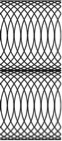
Protected as a trade mark in the UK since 2014.
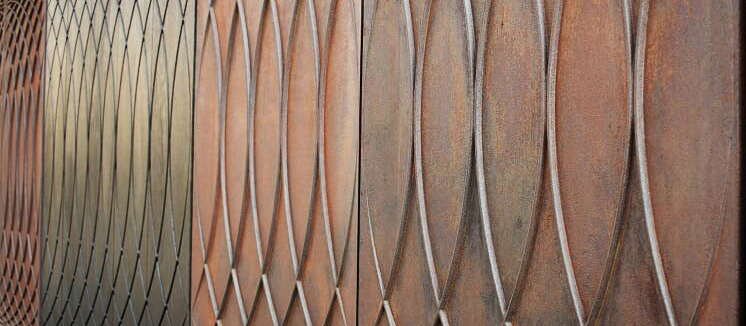
The design is applied to the metal panelling of the exterior of Paul Smith’s Mayfair store. Discreetly personalised, the panels are engraved with a couple of simple but fun drawings by Paul Smith himself. The design is registered trade mark for use in advertising but it has also been used a pattern to decorate accessories such wallets and cases.
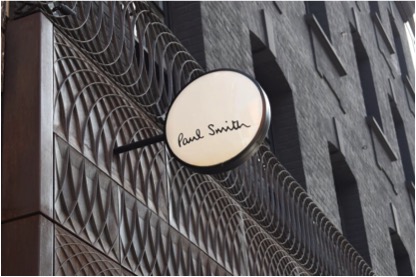
Paul Smith Store, Mayfair, London
FASHION REVOLUTIONNAIRE
In acknowledging his influence in fashion, in 2013 the London Design Museum curated the exhibition “Hello, My Name is Paul Smith”. Praised for his “unique and innovative take on design” he has become renowned for looking at fashion with a glint of fun. From his early tailored classic shirts to working with cutting edge fabrics to create the ‘Suit To Travel In’, Paul Smith had transformed the tailored suit from restricting and uptight to liberating and individualistic.
It is not his success but rather his approach that makes most headlines. In his talks to emerging fashion designers Paul Smith talks about hard work and individuality and the power the two have when placed together.
“My advice for anyone starting a business is don’t let complacency set in, don’t think you have made it, reassess all the time, try to keep your overheads as low as you can and be flexible as the river is flowing really fast.”
Paul Smith
GROWTH
In 2015 Paul Smith streamlined the company’s labels. He consolidated Paul Smith, Paul Smith Jeans and Paul Smith London into two lines Paul Smith (main collection) and PS by Paul Smith (a more casual, more affordable collection) in order to strengthen its core brand.
Paul Smith’s independent ventures into publishing, product design and architecture, alongside his fashion house, may seem odd in places but in light of his personal hobbies they all make sense, and rather complement his clothing label. The brand has conveyed a general curiosity for innovation, adventure and versatility, reflected in the company’s unconventional side projects.
Paul Smith’s very first shirt store in Covent Garden, although small, was filled with quirky items including books and figurines. Prior to encountering the world of fashion, cycling has been one of his greatest passions. Something he could have pursued professionally had it not been for an early injury. Another passion and a source for inspiration is his love for photography. He has endeavored to design tea sets, furniture fabrics and decorative items. Driving a Mini Cooper himself, in 1988 he collaborated with the British Motor Corporation to design a limited edition of Mini Coopers, including the ‘Mini stripe’, ‘Paul Smith Blue’ and a black and white version for the Japanese market.
Paul Smith’s re-interpretation of one of his favourite children’s books ‘Richard Scarry’s Cars and Trucks and Things that Go’.

A collaboration with Rapha bicycles: ‘Rapha + Paul Smith’
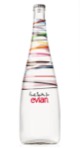
Paul Smith collaborates with Evian producing a limited edition of water bottles.
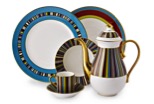
Collaboration with Thomas Goode & Co for a signature stripe bone china design.

Collaboration with a number of designers like Finn Juhl, Phil Goss and Ann Carrington for bespoke furniture designs and artworks exhibited in Paul Smith store in No. 9 Albemarle Street.
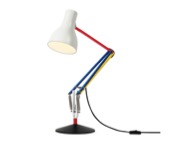
Collaboration with lamp manufacturer Anglepoise led to the creation of Type 75 limited Paul Smith Edition.
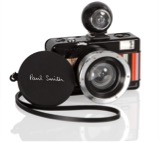
Collaboration with Leica cameras.
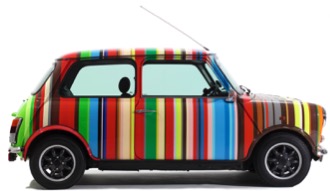
Collaboration with British Motor Corporation in designing the ‘Stripe Mini’.
CLOSING THOUGHTS
Paul Smith designs emblemise the very fabric of modern culture while the choice of patterns carry through the feel of the punk era. The era in which the label was born and from which it depicted its subversive attitude and individualist spirit of the generation of the 70s.
His approach to business is equally defiant. Paul Smith is privately owned, unlike fashion brands like Ralph Lauren, Tiffany & Co and Michael Kors which are publically traded, and Paul Smith himself is the majority owner. The fashion industry today finds itself dominated by a handful of conglomerate fashion groups like LVMH (Louis Vuitton Moet Hennesy) who own a collection of brands like Dior, Emilio Pucci, Fendi, Givenchy, Marc Jacobs and Thomas Pink. The will of fashion labels to grow makes the option of acquisition tempting and a necessary business strategy but also carries an element of comprise on part of founders. Retaining that small business feel of what is an exceptionally successful label has a significant contribution to the charm of the company.
 tradeinsignatures.com
Leave a comment